
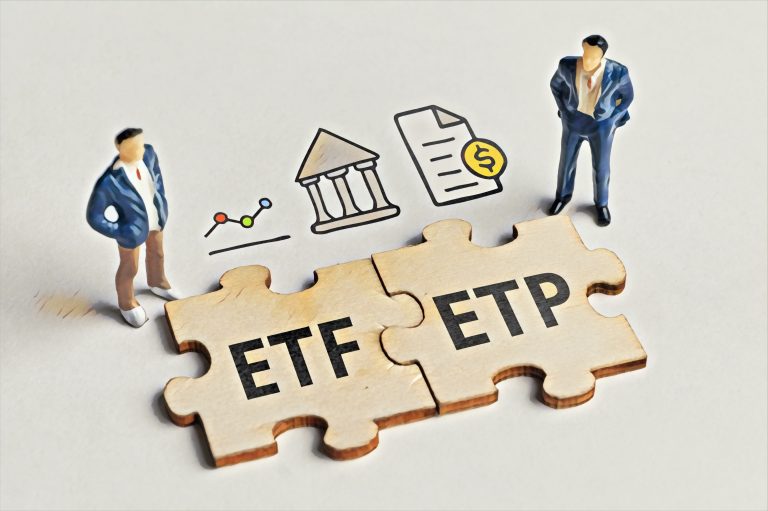
You want to launch an investment product. Different vehicles are available, and each comes with different costs, rules and investor reach. Pick the wrong one and you either overpay for years or bend your strategy to fit the wrapper.
Here is how the five options compare.
1. ETF
In Europe, ETF is like a UCITS fund with an exchange listing on top, traded intraday like a share.
Pricing model (white-label platform):
- Setup: about EUR 60,000 per ETF, according to HANetf’s head of ETF research, speaking to DAS INVESTMENT in November 2025; some platforms, such as EPIC Investment Partners, charge none. Building your own ETF business instead costs about EUR 6 to 12 million before raising any assets, according to HANetf’s January 2025 guide.
- Fixed fees: about EUR 200,000 a year per ETF, according to HANetf, depending on the number of listings, services and country registrations.
- Variable fees: not published; each platform quotes its own, and EPIC, for example, uses tiered pricing that falls as assets grow. Index-tracking ETFs also pay an index licence, which in some cases takes 50% to 60% of the fee income.
- Audit: about EUR 12,500 to 14,000 per ETF a year (Robeco UCITS ICAV and M&G ETF ICAV, 2025), paid out of the ETF’s all-in fee like its other operating costs.
- Market making: required. On Xetra, the issuer must engage at least one market maker per ETF; the fee is agreed privately and not published. Investors also pay the bid-ask spread, which averaged 3.9 basis points for the 20 most liquid equity ETFs on Xetra in 2025; new ETFs risk wider spreads.
- What the fees cover: the management company, administration, depositary, audit, listings, registrations and tax reporting, which, for example, Irish ETFs pay out of one all-in fee.
- Not covered: the market maker’s fee (unless your platform includes it), your own management fee and trading costs.
Time to launch: about 8 weeks on an existing white-label platform, according to HANetf, versus 24 months or more to build your own ETF business.
Strengths:
- A huge, growing market: European ETF assets reached a record of around EUR 3.25 trillion at the end of September 2026.
- Investors can buy through any bank or broker.
- UCITS investor protection, with the assets held by a depositary.
Weaknesses:
- Crowded: at the end of August 2026, 3,973 European ETFs from 171 providers competed for flows, and iShares alone held 39.1% of assets.
- High mortality: 116 European ETFs were merged or liquidated in 2024, against 240 launches.
- Carries every UCITS restriction (see below), plus listing and market-making costs.
Who it’s for: index-like or rules-based strategies with a realistic path to nine-figure AuM.
2. UCITS Fund
Pricing model (example: the HOW Global Leaders Fund, a sub-fund of the Liechtenstein UCITS umbrella HOW Invest SICAV, 2025):
- Setup: about EUR 75,000.
- Fixed fees: administration minimum about EUR 43,400 a year (plus about EUR 5,400 for each additional share class), depositary at least about EUR 21,700, and the regulator’s levy of about EUR 1,100 to 2,200.
- Variable fees: administration 0.20% and depositary 0.115% of AuM a year, which replace the minimums once they are higher (from roughly EUR 19 to 22 million), plus a regulator’s levy of 0.0015%.
- Audit: about EUR 10,600 a year (EUR 5,000 to 14,000 across UCITS funds in Austria, Liechtenstein, Luxembourg and Ireland in 2025), billed separately on top of the fees above.
- Market making: none needed, so no cost. Investors buy and redeem units directly with the fund at NAV, on dealing days at least twice a month, and pay no market-maker spread.
- What the fees cover: there is no single all-in fee; the fund pays each service separately, plus other costs the annual report doesn’t itemise.
- Not covered: your management and performance fees, and trading costs.
Time to launch: once the application is complete, regulators must decide within 4 weeks in Germany, 1 month in France and at most 2 months under EU rules. In practice, with review rounds, authorization takes around 12 to 16 weeks in, for example, Ireland.
Strengths:
- The deepest pool of distribution: UCITS net assets stood at EUR 18.3 trillion at the end of May 2026, according to the European
- Fund and Asset Management Association.
- Retail passport across the EU.
- Investor protection: a depositary holds and safekeeps the fund’s assets.
- Investor liquidity: a UCITS must redeem units at any investor’s request and publishes dealing prices at least twice a month.
Weaknesses:
- The 5/10/40 rule: no more than 5% of NAV per issuer, up to 10% allowed, but all positions above 5% together may not exceed 40%.
- Limited toolbox: no direct crypto, no precious metals, and derivatives only on eligible underlyings such as securities, financial indices, interest rates and currencies, so a single-commodity future such as crude oil or gold is off-limits.
- No physical short selling: short positions are only possible through derivatives.
- Leverage is capped: derivative exposure may not exceed 100% of NAV under the commitment approach, funds using the absolute
- VaR approach are held to 20% of NAV, and borrowing is limited to 10% of NAV on a temporary basis.
- More steps per trade: orders may only go to the brokers named in the management company’s execution policy, every investment decision is checked against the fund’s objectives and risk limits, and the assets sit with the depositary rather than in a broker account you trade directly.
- Six-figure fixed costs before the first euro of AuM.
Who it’s for: diversified long-only or bond strategies, especially if your distributors only buy UCITS.
3. Private Fund (AIF)
An alternative investment fund that can invest in almost any asset class. AIFs can be set up in many domiciles: within the EU, the main choices are Luxembourg and Ireland, which together hold roughly 91% of global cross-border fund AuM (48% and 43%). Offshore options include the Cayman Islands and the Channel Islands. The figures below compare common European options: Luxembourg’s RAIF, Ireland’s QIAIF, Malta’s PIF and Germany’s Spezial-AIF.
Pricing model (Luxembourg RAIF, with an Irish QIAIF about the same; self-managed Malta PIF; German platform model for venture capital funds):
- Setup: about EUR 60,000 to 160,000 for a Luxembourg RAIF; no published figure for a Malta PIF; none on the German platform.
- Fixed fees: for a Luxembourg RAIF, an AIFM minimum of EUR 75,000 to 100,000+, plus EUR 25,000 to 50,000 for the depositary and EUR 40,000 to 60,000 for administration a year. For a Malta PIF, EUR 15,000 to 30,000 for administration, EUR 25,000 to 30,000 for directors, compliance officer and MLRO, and regulatory fees in the low thousands a year, with no AIFM and little or no depositary cost. On the German platform, EUR 35,000 a year for the first EUR 2 million of committed capital.
- Variable fees: for a Luxembourg RAIF, 0.20% to 0.40% of NAV for the AIFM once that exceeds its minimum (from roughly EUR 19 to 50 million), plus a 0.01% subscription tax. For a Malta PIF, none quoted. On the German platform, 0.14% on committed capital above EUR 2 million.
- Audit: EUR 15,000 to 50,000 a year for a Luxembourg RAIF and EUR 3,000 to 15,000 for a Malta PIF, billed separately on top of the fees above; the German platform’s pricing doesn’t mention audit.
- Market making: none needed, so no cost. A private AIF is usually not listed; investors subscribe and redeem with the fund only as often as its documents allow, and a closed-ended AIF does not buy units back on request before it winds down.
- What the fees cover: in Luxembourg, Ireland and Malta there is no single all-in fee; each service provider (AIFM, depositary, administrator, auditor, and in Malta the directors) bills the fund separately. The German platform bundles administration, fund formation, investor onboarding and the depositary appointment into its fee.
- Not covered: your management and performance fees and trading costs, plus regulatory fees on the German platform.
Time to launch: the regulatory step takes from the next business day for an Irish QIAIF, and 10 working days for a Malta notified AIF, to 20 working days for German marketing approval. Including documents and AIFM onboarding, launches typically take 4 to 6 weeks for a Luxembourg RAIF and 10 to 16 weeks for an Irish QIAIF.
Strengths:
- Near-total investment flexibility: private equity, real estate, debt, hedge strategies.
- Investor protection: the assets are held by a mandatory depositary.
Weaknesses:
- Narrow distribution: unless they are professional investors, investors usually need to commit at least EUR 100,000 in Luxembourg, Ireland and Malta, and EUR 200,000 as semi-professional investors in Germany.
- No click-to-buy access: every investor goes through subscription documents, identity checks and sanctions, PEP and adverse-media screening. For foreign investors and complex structures this typically takes 1 to 3 weeks, and one in seven managers has seen an investor walk away because of poor onboarding.
- An extra management layer: unless the fund is self-managed, the AIFM must carry out portfolio and risk management, so you run the strategy as its delegate or adviser, within its risk framework.
Who it’s for: illiquid assets, private equity, private credit, hedge fund-style strategies using leverage and short positions, or a small circle of large professional investors.
4. OTC Private Placement AMC
An Actively Managed Certificate issued by a bank or SPV and placed privately, without an exchange listing.
Pricing model (three privately placed AMCs: two issued by MR3 Issuer PCC in Guernsey, term sheets from April 2022 and March 2024, and one by NRO Issuer in the Cayman Islands, February 2024):
- Setup: one-off fee of about EUR 19,500 in the 2024 Guernsey AMC, deducted from the certificate’s value over its first six months; none stated for the Cayman AMC. Other sources put setup at EUR 9,000 to 54,000.
- Fixed fees: a minimum of about EUR 21,700 a year in the 2024 Guernsey AMC; none stated in the Cayman AMC.
- Variable fees: an issuer administration fee of 0.40% to 0.50% of AuM a year.
- Audit: no separate fee. An AMC is a debt security of its issuer rather than a fund, so the issuer is audited once for all its products and the cost is part of the issuer fee.
- Market making: no separate fee, but no exchange quote either. The issuer buys certificates back itself, on a best-effort basis, at a 1% spread in normal markets in all three AMCs. The Cayman AMC deals only weekly, with three business days’ notice; the 2022 Guernsey AMC also allows a distribution fee of up to 2% on purchases and charges a 5% redemption fee in the first year, falling to zero after five years.
- What the fees cover: one issuer fee for the issuer’s administration, valuation, paying agent and audit.
- Not covered: broker trading costs, any broker custody fees, and your management and performance fees. The two Guernsey AMCs cap all running fees, including yours, at 3.5% a year.
Time to launch: typically 3 to 6 weeks.
Strengths:
- Flexible: public, private, crypto and structured assets possible.
- One ISIN that settles through standard custodians.
Weaknesses:
- Private placement only, typically reserved for qualified investors such as high-net-worth individuals and family offices.
- Limited liquidity: in some term sheets, the certificate can only be sold back to the issuer.
- Issuer risk: unless the AMC is collateralized, investors carry the issuer’s credit risk.
- Indirect trading: in some term sheets, the strategy is a notional portfolio that the manager maintains and the issuer values.
Who it’s for: managers with an existing network of qualified investors who do not need retail reach or exchange liquidity.
5. ETI by iMaps
An exchange-listed structured product linked 1:1 to a Segregated Portfolio that you manage through a brokerage account at one of the eligible brokers, such as Interactive Brokers, Coinbase Prime or Vantage. It combines AMC flexibility with an exchange listing and retail reach.
Pricing model:
- Setup: no setup fee, only a EUR 6,000 deposit, refunded in full once average AuM reaches EUR 300,000 over the six monthly NAVs.
- Fixed fees: EUR 1,000 a month (EUR 12,000 a year), plus EUR 75 a month (EUR 900 a year) for the reference and warehouse/clearing account. ETIs holding crypto add crypto accounting of about EUR 490 a month.
- Variable fees: a 0.20% p.a. issuer management fee on AuM.
- Audit: no separate fee; the annual audit is included in the EUR 1,000 monthly fee.
- Market making: no separate fee. iMaps quotes the ETI itself on the Stuttgart Stock Exchange every trading day 9-17.30 CET, with EUWAX AG as Quality Liquidity Provider. Investors pay a spread of 1% each side while AuM is below EUR 2.5 million, and 0.50% each side above that.
- What the fees cover: NAV calculation, reporting, audit, listing, paying and issuing agent, registrar, ISIN maintenance, FMA fees, Segregated Portfolio maintenance, collateralization, and dealing with the market maker and the exchange.
- Not covered: broker trading fees, EUR 250 per document update after listing, EUR 20 to 40 per payment from / to broker account, and your management and performance fees. For public offerings, total management fees, including yours, are capped at 4.5% a year, and performance fees at 30%.
Time to launch: about 30 business days from accepted due diligence to the first trading day.
Strengths:
- The retail public offering, the listing on the Stuttgart Stock Exchange and daily market making with EUWAX AG as Quality Liquidity Provider together mean your investors’ banks can, and are willing to, open the ETI’s ISIN in their systems. The public offering comes with an FMA-approved base prospectus and a KID. In our experience, if even one of these elements is missing, it often fails.
- Trade anything your broker executes (within your trading strategy): unlimited rebalancing, including intraday, plus leverage and short positions through derivatives within the broker’s limits.
- Retail reach: available for retail public offering in the EEA countries and Switzerland, and to professional investors across the EU, UK, Norway and Iceland.
- Easy access: investors buy on the Stuttgart Stock Exchange through their regular bank or broker, just like a share or an ETF.
Daily liquidity from 9:00 to 17:30 CET, with EUWAX AG as Quality Liquidity Provider. EUWAX AG supports trading in around 2.3 million securities at the Stuttgart venue. - Investor protection: the underlying assets are pledged to an independent trustee for the benefit of ETI investors, protecting them from issuer risk.
- Hedge fund-style fees possible, such as 2 and 20. For regulatory purposes, the maximum Total Management Fee of an Exchange Traded Instrument (ETI) issued under iMaps programme is limited to 4.5% p.a. plus performance fees.
- Proven: iMaps has issued EUR 1bn+ across 200+ issuances.
Weaknesses:
- Not a fund: mandates or platforms that only accept fund units cannot hold it, although UCITS funds can generally buy ETIs as eligible transferable securities.
- A few exclusions: no naked shorts, physical commodities, physical real estate, unlisted closed-ended funds, private equity or private debt.
Who it’s for: active managers trading equities, futures, options, FX, CFDs or digital assets, including long/short strategies, who want a listed product with an ISIN that retail and professional investors can buy through their own bank or broker.
Already Running a Fund? You Do Not Have to Choose.
With a Fund-Linked Note, the Segregated Portfolio is set up as a feeder that simply invests in your existing open-ended fund or portfolio of funds. Your fund keeps running as it is, and the ETI gives it an exchange-listed access point.
So, Which One Fits?
- Planning EUR 100m+ in an index-style strategy? Look at an ETF.
- Distributors only buy UCITS and your strategy is diversified long-only? Choose UCITS.
- Illiquid assets and a handful of large professional investors? A private fund fits.
- A closed circle of qualified investors and no need for a listing? An OTC AMC works.
- Active strategy in assets your broker trades, retail and professional investors buying through their own bank, and AuM between EUR 500,000 and 50+ million? That is what the ETI was built for.
You bring the strategy. iMaps handles the structure, the listing and everything around it.
Sources:
DAS INVESTMENT, November 2025, quoting HANetf (white-label ETF setup and annual costs, EPIC’s pricing); HANetf, 2025 (in-house ETF build costs and launch timelines); ETF Stream, quoting HANetf and GHCO (ETF cost components, index licence share, paid market making); Deutsche Börse (designated sponsor requirement and 2025 ETF spreads on Xetra); ETF Central, January 2025 (paid market making in Europe); LSEG Lipper, 2021 to 2026, also via Teleborsa (ETF assets, launches, closures and closure risk by size); ETFGI, 2026 (number of European ETFs, providers and iShares share); Robeco UCITS ICAV, M&G ETF ICAV, Alpha UCITS SICAV, HOW Invest SICAV and IQAM Standortfonds Österreich annual reports 2025 (ETF and UCITS audit fees, all-in fees and the HOW Global Leaders Fund fee schedule); activelymanagedcertificate.solutions (UCITS setup costs); Funds Europe, 2018 (Lipper’s fund viability threshold); EFAMA, 2026 (UCITS net assets); Pinsent Masons and AMF instruction DOC-2011-19 (UCITS authorization timelines in Ireland and France); UCITS Directive 2009/65/EC, Directive 2010/43/EU, CSSF Circular 05/176 and CESR/10-788 (UCITS investment, leverage, trading, dealing, depositary and authorization rules); Fidus and LuxLex, 2026 (AIF fee breakdown, setup costs, minimum capital, viable size, investor minimums and timelines in Malta, Luxembourg and Ireland); Infra One, 2026 (German AIF platform pricing); Ocorian, 2024 and 2026 (Irish QIAIF timeline and investor minimum, fund domiciles); CSB Group, 2026 (Malta notified AIF timeline and investor minimum); KAGB §§ 1, 163 and 321, AIFM Directive 2011/61/EU and Delegated Regulation (EU) No 694/2014 (German investor minimum, approval deadlines, AIFM duties, open-ended and closed-ended AIFs); Caruso, IQ-EQ and Carta (investor onboarding and KYC); MR3 Issuer PCC term sheets for CH1138770818 (April 2022) and CH1320847416 (March 2024) and NRO Issuer term sheet for CH0539505740 (February 2024) (OTC AMC fees, fee caps, buy-back terms and spreads); Fume, Atrinum Ventures, vestr and Kellerhals Carrard, FundFront and a GenTwo term sheet (OTC AMC setup costs, valuation, minimums, timelines and terms); Interactive Brokers, BDO Switzerland and Damalion, 2022 to 2026 (AMC audit at issuer level and all-in issuer fees); iMaps term sheets, Base Prospectus 2026, UCITS eligibility note and Security Overview (ETI fees, fee caps, market making, rules and investor protection); iMaps website and EUWAX AG (issuance figures, investor access and liquidity).